Bypassing the Critical Factor: The Neuroscience of the Alpha Brainwave State
At a Glance: Have you ever noticed that you can logically know a habit is bad for you, yet you feel powerless to stop it? This is because of the "Critical Factor"—a mental filter that guards your subconscious. To create real change, you don't need more logic; you need to bypass this filter. RTT uses the Alpha brainwave state to do exactly that.
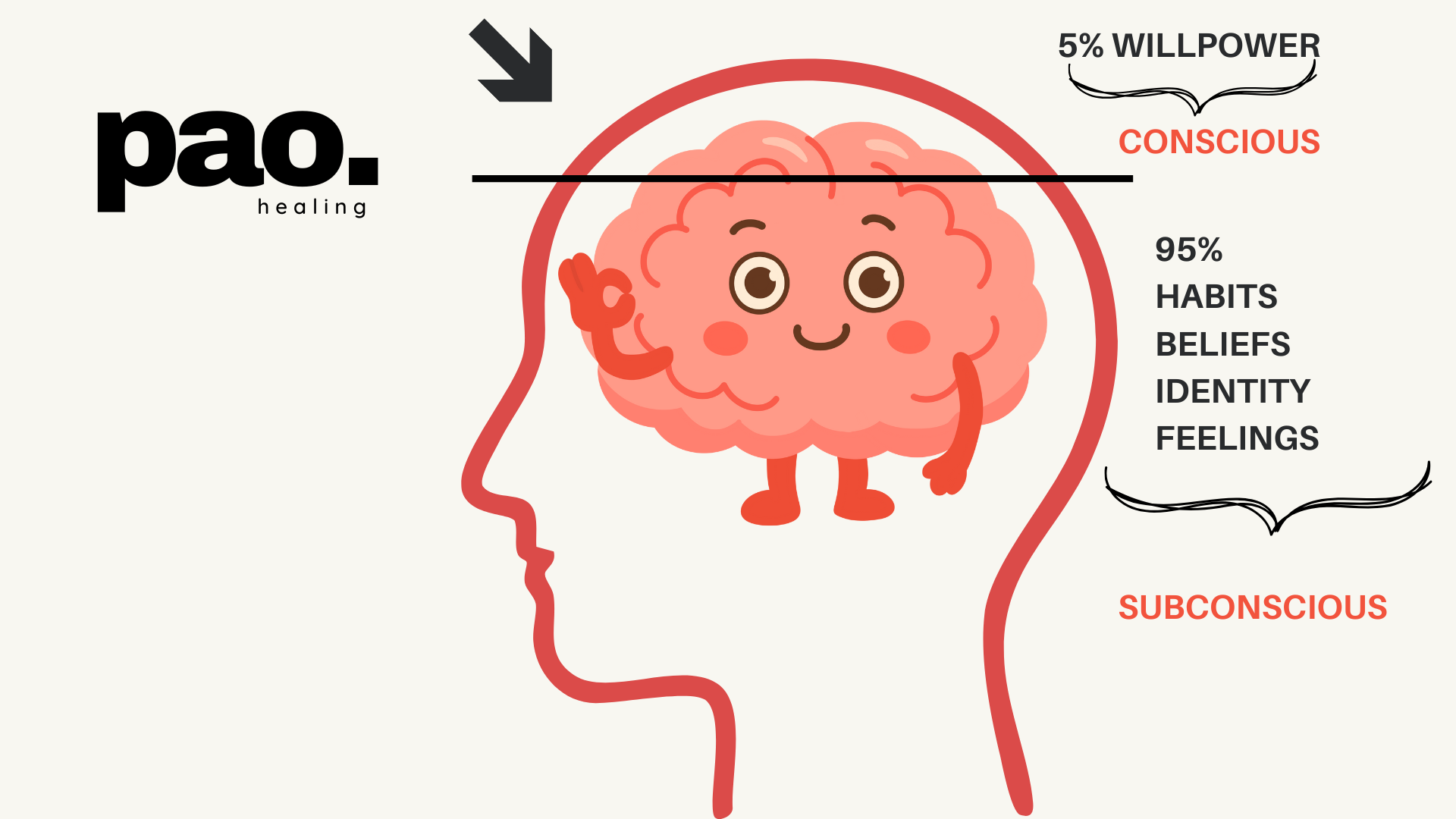
The Critical Factor is the gatekeeper that protects the subconscious from change
What is the "Critical Factor"?
Between your conscious and subconscious mind lies a gatekeeper known in psychology as the Critical Factor. Think of it as a high-level security firewall.
Its job is to compare new information to your existing "Internal Blueprint." If you try to tell yourself "I am indifferent to sugar" while your subconscious blueprint says "Sugar is my only reward after a stressful day," the Critical Factor rejects the new thought. It says, "Access Denied. This doesn't match our current data."
This is why positive affirmations and "willpower" rarely work for deep-seated habits—they simply can't get past the firewall.
The Alpha State: The Key to the Command Prompt
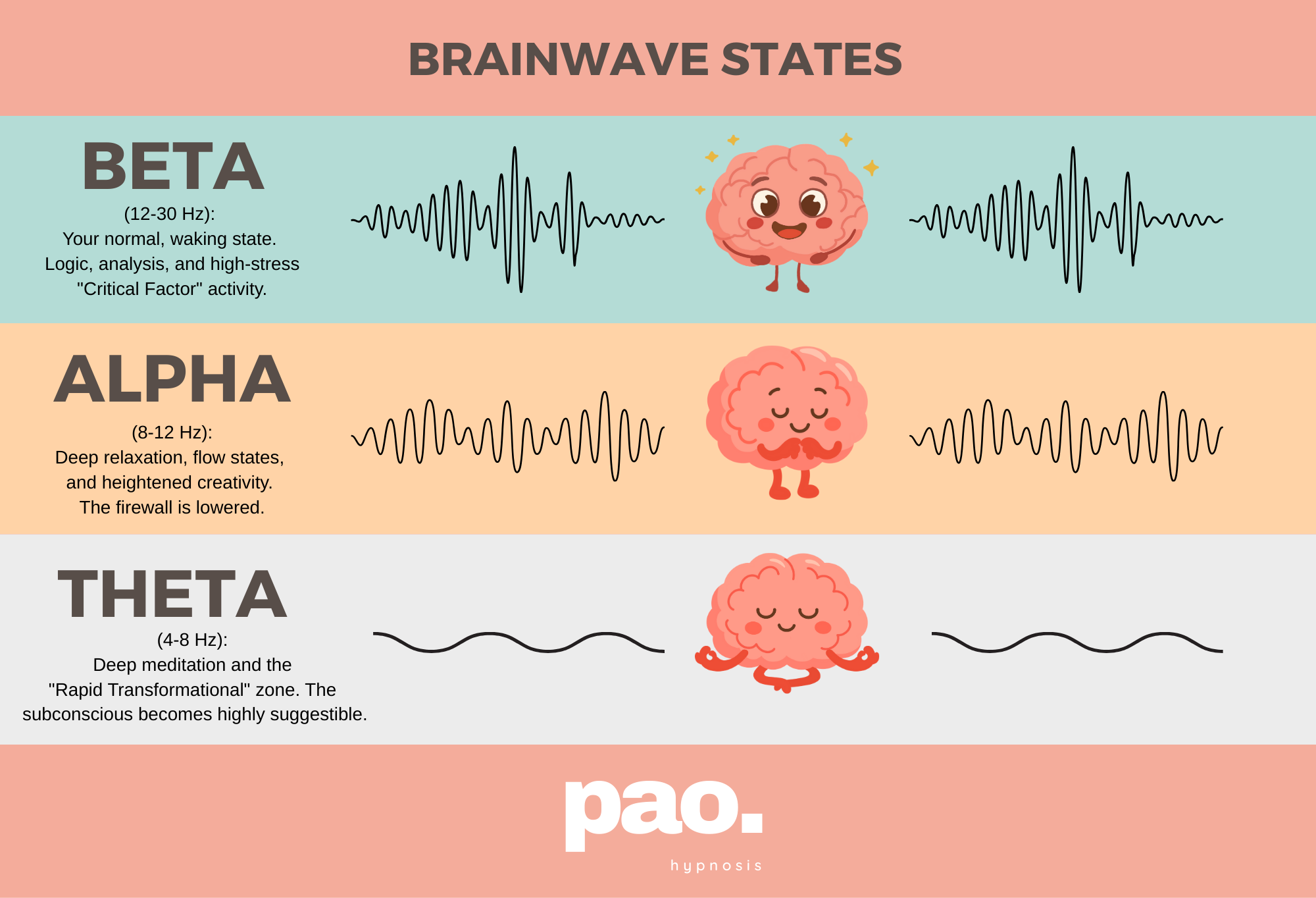
The different brainwave states of hypnotherapy and habit reprogramming
To update your "Internal Code," we have to temporarily relax that gatekeeper. This happens naturally when your brain enters the Alpha brainwave state.
Beta (12-30 Hz): Your normal, waking state. Logic, analysis, and high-stress "Critical Factor" activity.
Alpha (8-12 Hz): Deep relaxation, flow states, and heightened creativity. The firewall is lowered.
Theta (4-8 Hz): Deep meditation and the "Rapid Transformational" zone. This is where the subconscious becomes highly suggestible.
In an RTT session at Pao Hypnosis, we use guided relaxation to transition your brain from high-stress Beta into the receptive Alpha and Theta states.
Why "Logical" Therapy Takes So Long
Traditional talk therapy operates almost entirely in the Beta state. You are analyzing, talking, and thinking. While this provides insight, it often fails to provide transformation because the Critical Factor remains active. You understand "why" you do what you do, but the "feeling" of the craving or the anxiety remains unchanged.
RTT is the shortcut. By bypassing the filter, we can:
Directly Access the Code: Find out exactly when and why the "Security Program" or habit was installed.
Rewrite the Program: Feed the subconscious new, better data while the firewall is down.
Lock in the Change: Use a custom "System Update" audio to hardwire these new neural pathways over 21 days.

The Power Buyer's Edge: Efficiency
For the high-performing professional in Coral Gables, time is the most expensive commodity. You don't have years to spend "managing" a habit.
By understanding the neuroscience of the Critical Factor, you can stop fighting your biology and start using it to your advantage. When the firewall is down, the update is instant.
Ready to Bypass the Filter?
Your conscious mind is ready for change. It’s time to get your subconscious on board.
Diagnose Your Glitch: Take the Binge Code Audit to see which of your 3 Pillars is being blocked by your "Critical Factor."
Book Your Neuroscience-Based Consultation: Let’s look at the blueprint together.
The ‘Struggle Tax’: The Real ROI of Solving Your "Wired and Tired" Brain
At a Glance: In the high-stakes world of Coral Gables business and law, sleep is often the first thing sacrificed. But chronic "Wired and Tired" syndrome isn't just a health issue; it’s a financial and cognitive drain. This is the Struggle Tax—the hidden cost of an outdated subconscious Safety Code that refuses to hit the "off" switch.
What is the "Struggle Tax"?
High-achievers are experts at "pushing through." You can survive on five hours of sleep and three espressos, but at what cost?
The Cognitive Tax: Slower decision-making and reduced emotional intelligence (EQ).
The Health Tax: Elevated cortisol levels that lead to stubborn weight gain around the midsection.
The Emotional Tax: That constant "low-hum" of anxiety that prevents you from being present with your family after a long day.
When you spend your night negotiating with a racing mind, you are paying a tax on your tomorrow.
Pillar 3: The Glitch in the 'Safety Code'
If you are exhausted but your mind starts "running tabs" the moment your head hits the pillow, you likely have a Pillar 3: Safety Code Glitch.
Your subconscious mind has one primary job: Keep you safe. For many high-performers, the brain has mistakenly linked "constant vigilance" with "success." It believes that if it stops worrying, you will drop the ball. It views sleep as a vulnerability rather than a restoration.
You aren't "bad at sleeping." Your brain is simply working overtime to protect you from a threat that doesn't exist.
The ROI of Restoration
When we use RTT to perform a System Update on your Safety Code, we aren't just helping you "fall asleep." We are teaching your nervous system that it is safe to power down.
The result is a massive ROI in every area of your life:
Executive Clarity: Decisions that used to take an hour now take ten minutes.
Metabolic Efficiency: When your body finally exits "Fight or Flight" mode, your cortisol drops, and your "Pillar 1" cravings often vanish naturally.
Presence: You move from "Reactive" to "Proactive." You own your day instead of your day owning you.

Rewire Your Night, Reclaim Your Day
At Pao Hypnosis, we don't suggest more "sleep hygiene" tips or herbal supplements. We go to the root of the vigilance.
We find out why your subconscious doesn't trust you to sleep. We acknowledge the old program, we delete the "threat link," and we install a new blueprint of Deep Restoration.
Stop paying the Struggle Tax. It’s time to invest in the version of you that is fully charged.

Is Your Safety Code Outdated?
Don't wait for burnout to be your wake-up call.
Audit Your Sleep: Take the Binge Code Audit to see if your Safety Code is your primary glitch.
Book Your System Update: Schedule a consultation at our Coral Gables office or via Zoom.
Weight Loss Without Resistance: How to Achieve Subconscious 'Indifference' to Sugar
At a Glance: Traditional weight loss is built on the concept of resistance—constantly saying "no" to things you actually want. But for the high-performer, this mental friction is exhausting. The secret to permanent change isn't more resistance; it’s Indifference. By updating your subconscious "Food Code," you can reach a state where trigger foods simply lose their power over you.
The Exhaustion of "Resisting"
If you’ve ever sat at a dinner party in Coral Gables, staring at the dessert tray - with flan, tres leches, key lime pie and guava filled pastries - while mentally calculating your calories, you know the "Struggle Tax." You are physically present, but mentally, you are in a high-stakes negotiation with your own brain.
This is Resistance. And resistance is a finite resource. It’s why you can be "perfect" all day at the office, only to find yourself binging in the kitchen at 9:00 PM. Your conscious mind is tired, and your subconscious "Food Code" has taken the wheel.
What is Subconscious Indifference?
Imagine walking past Caracas Bakery on Miracle Mile while the smell of freshly baked cachitos hangs in the air or opening the pantry after a stressful day and feeling... nothing. No pull, no "just one bite" internal dialogue, and no need to use willpower.
This is Indifference.
Indifference happens when your subconscious mind no longer associates that specific food with safety, reward, or emotional soothing. When the "Code" is updated, the food becomes neutral—like a bowl of wax fruit. You see it, but you don't want it.
Pillar 1: The Glitch in the 'Food Code'
In my Binge Code Audit, we often find that a struggle with weight is actually a Pillar 1: Nourishment Glitch. Somewhere in your past, your subconscious mind created a "Safety Link" between sugar and comfort. Perhaps it was a reward from a grandparent, or a way you soothed yourself during a stressful period in your career.
Your brain isn't trying to make you gain weight; it’s trying to provide "instant peace."
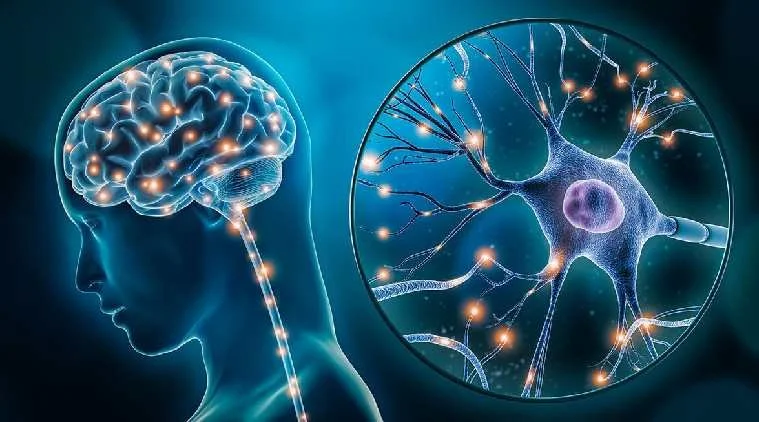
Source: Ruby Hall Clinic - Neuroplasticity: How Your Brain Can Change And Adapt
How We Install the 'Indifference' Blueprint
Using Rapid Transformational Therapy (RTT), we don't just talk about the cravings. We perform a System Update on the "Nourishment Code":
Locate the Link: We identify exactly when your brain decided that [specific food] equals [safety/love/stress relief].
Interrupt the Reward Loop: We show the subconscious that this "safety program" is actually causing the very stress and health issues you’re trying to avoid.
The New Blueprint: We install a brand-new program of Self-Nourishment. We rewire the brain to find peace in rest and restoration, rather than in a glucose spike.

The "Day 22" Reality
Most of my clients in the Gables are shocked by how quickly this shift happens. They spent decades identifying as a "sugar addict" or an "emotional eater."
After a system update, that identity evaporates. They become what I call "Naturally Indifferent." They eat for fuel, they enjoy high-quality nourishment, and they simply don't think about the rest.
The mental bandwidth you get back when you stop negotiating with food is the ultimate ROI.

Are You Ready to Stop Resisting?
The path to your goal weight doesn't have to be a battle. It can be a software update.
Find Your Glitch: Take the 5-minute Binge Code Audit to see if your Food Code is outdated.
Book Your Consultation: Let’s move you from "Trying" to "Indifferent."
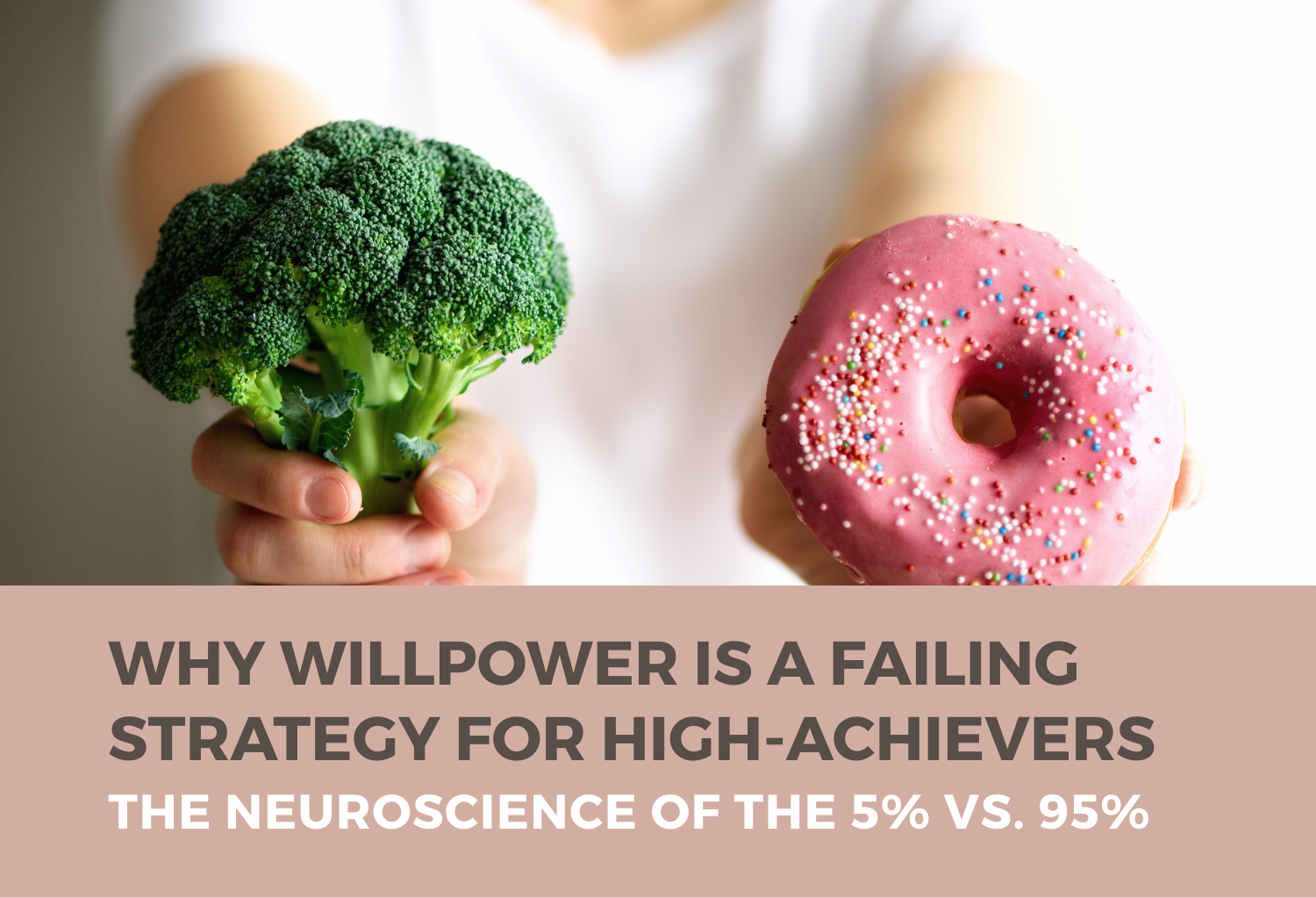
Why Willpower is a Failing Strategy for High-Achievers: The Neuroscience of the 5% vs. 95%
At a Glance: For high-performers in Coral Gables and beyond, "trying harder" is rarely the solution to weight loss or insomnia. Modern neuroscience reveals that willpower is a limited conscious resource (5%), while your habits are driven by the subconscious (95%). To create permanent change, you don't need more grit; you need a subconscious system update.
The conscious vs subconscious mind
The "Willpower Tax": Why Smart People Get Stuck
If you are a high-achiever, you’ve likely built a career, a family, or a business through sheer determination. Naturally, when you decide to lose weight or fix your sleep, you apply that same "grit."
But then, 9:00 PM hits.
Despite your best intentions, the "Ancient Code" of your subconscious kicks in. You find yourself reaching for the sugar or scrolling on your phone until 1:00 AM. This isn't a character flaw; it’s a neurobiological mismatch.
The 5% vs. 95% Conflict
The Conscious Mind (5%): This is where your logic, goals, and willpower live. It’s the part of you that buys the gym membership and the organic meal plan.
The Subconscious Mind (95%): This is the "autopilot." It controls your breathing, your heart rate, and—most importantly—your survival programs.
The Science: Research suggests that the subconscious mind processes information at roughly 20 million bits per second, while the conscious mind manages only about 40 bits. When your 5% willpower goes up against your 95% subconscious programming, the subconscious wins every single time. Source: The Biology of Belief, Dr. Bruce Lipton

The "Logic Gap": Why Your Brain is Sabotaging You
In my practice at Pao Hypnosis, I see high-performers who are exhausted by the "negotiation" in their heads.
The reason your willpower fails is that your subconscious believes your current habit—whether it’s binging on chocolate or staying awake to worry—is actually keeping you safe. * Pillar 1 (The Food Code): Your brain thinks sugar is "instant fuel" for your high-stress lifestyle.
Pillar 3 (The Safety Code): Your brain thinks staying "wired" at night is "vigilance" against potential threats.
You cannot "willpower" your way out of a survival program. You have to renegotiate the terms.
Beyond "Trying Harder": The RTT System Update
This is where Rapid Transformational Therapy (RTT) changes the game. Instead of spending months in talk therapy discussing the problem, we use the "Alpha" brainwave state to access the 95%.
Interrupt the Loop: We find the specific moment your subconscious installed the "glitch."
Delete the Charge: We remove the emotional "need" for the old habit.
Install Indifference: We hardwire a new blueprint where you don't "resist" the old habit—you simply become indifferent to it.
The Evidence: A landmark study on neuroplasticity confirms that focused attention and repetition can physically rewire the neural pathways in the brain, allowing for the rapid adoption of new behaviors. Source: Neuroplasticity and Learning, NCBI
Stop Paying the "Struggle Tax"
If you are living in Coral Gables or the surrounding Miami area, you know that time is your most valuable asset. You wouldn't try to run your business on a 20-year-old operating system—so why are you trying to run your health on one?
Hypnosis isn't about losing control; it’s about finally gaining authority over the 95% of your brain that has been running the show without your permission.
Find Your Glitch Today
Are you ready to stop fighting the 5% battle?
Take the Binge Code Audit: Identify if your struggle is a Nourishment, Power, or Safety glitch.
Book Your "Safety-First" Discovery Call: Let’s look at your results and map out your system update.

One of the most common questions I hear is, 'Pao, am I going to lose control?' I want to be very clear: My role as your RTT practitioner is not to 'take over' your mind, but to hand the steering wheel back to you. In our sessions, you are always the authority.

The "Control" Myth: Why Weight Loss Hypnotherapy is Actually the Ultimate Act of Self-Authority

If you’ve been curious about using hypnosis to finally end the cycle of emotional eating, but a voice in your head says, "What if I lose control?" or "What if they make me do something against my will?"—you aren't alone.
Pop culture, movies, and stage shows have spent decades painting hypnotherapists as mysterious figures with "mind control" powers. At PaoHypnosis.com, we believe the truth is actually the opposite: You are currently out of control of your cravings, and hypnosis is the tool that gives that control back to you.

1. The Science: You Are Always the Pilot
One of the biggest fears is the "zombie" myth—the idea that you’ll be unaware of what’s happening. In reality, clinical hypnosis is a state of focused attention, similar to being "in the zone" while driving or being deeply absorbed in a great book.
The Study: Research published in the journal Cerebral Cortex used MRI scans to show that during hypnosis, the brain’s "executive control" remains intact. You are not "asleep"; you are in a state of heightened learning. Source: Stanford Study on Brain Activity During Hypnosis

2. You Cannot Be Forced to Act Against Your Will
A common concern is the "abuse of power." However, the subconscious mind has a built-in safety mechanism: your Critical Faculty. If a hypnotherapist gave you a suggestion that violated your moral code or personal safety, your mind would simply reject it and "snap" you out of the trance state.
In Rapid Transformational Therapy (RTT), we don't "control" you; we collaborate with you. You are an active participant in "investigating" your past to find the root of your weight struggle.
3. The Ethical Standard: Clinical vs. Stage Hypnosis
It is vital to distinguish between Stage Hypnosis (entertainment) and Clinical Hypnotherapy (therapy).
Stage Hypnosis: Uses extroverts who want to perform for an audience.
Clinical Hypnotherapy: A professional, therapeutic relationship guided by strict ethical codes.
At Pao Hypnosis, our sessions are built on a foundation of consent and safety. You are always aware of your surroundings, you remember the session, and you are the one who decides to accept the new, healthy "programming" for your life.
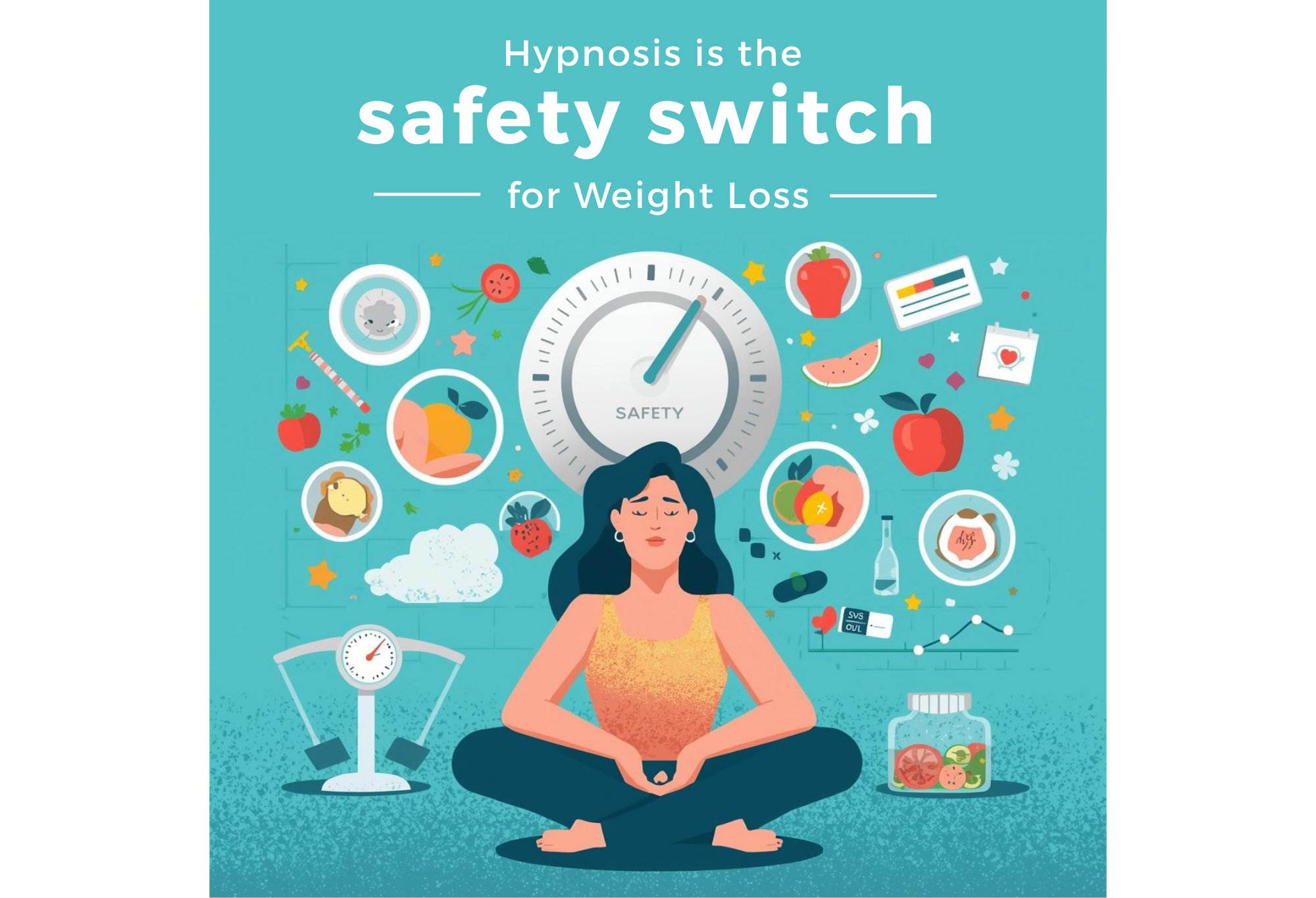
4. Why Hypnosis is Actually the "Safety Switch" for Weight Loss
Think about your current relationship with food.
Do you feel in control when you binge late at night?
Do you feel in control when you can't stop thinking about sugar?
That is the real "mind control"—your outdated subconscious programs are running the show without your permission.
The Evidence: A meta-analysis published in the Journal of Consulting and Clinical Psychology found that adding hypnosis to a weight-loss program increased the results by 97% and, more importantly, helped maintain the weight loss long-term. Source: Hypnosis as an Adjunct to CBT for Weight Loss

5. Reclaiming Your Authority with Pao Hypnosis
When you work with me at PaoHypnosis.com, we use hypnosis to unplug you from the addictive loops of the food industry. We aren't putting ideas into your head; we are removing the "glitches" that keep you stuck.
Hypnosis doesn't take away your power—it returns it to you.
Your Safety Checklist:
You are in total control of the session at all times.
You cannot be stuck in hypnosis (it’s impossible).
You define the goals; I simply provide the "GPS" to get you there.
FAQs: Addressing the Fear
Q: Can a hypnotherapist make me reveal secrets? A: No. Hypnosis is not a "truth serum." You have the same ability to choose what you say in hypnosis as you do in a normal conversation.
Q: What if I don't wake up? A: Hypnosis is a natural state of mind. If the therapist stopped talking, you would either drift into a light sleep or simply open your eyes when you realized the silence.
Ready to take back the wheel?
If you’re tired of being "controlled" by cravings and ready to step into your own power, let’s talk.

Can Hypnotherapy Help Break Sugar Addiction? The Science of Rewiring Your Cravings
If you’ve ever felt like your hand reaches for the cookie jar before your brain even gives the "okay," you aren’t weak—you’re programmed. Sugar addiction is one of the most stubborn "glitches" in the human software, but Rapid Transformational Therapy (RTT) and clinical hypnotherapy are proving to be the "system update" we’ve all been waiting for.
At Pao Hypnosis, we don’t just ask you to "try harder." We go straight to the source: your subconscious mind.
If you’ve ever felt like your hand reaches for the cookie jar before your brain even gives the "okay," you aren’t weak—you’re programmed. Sugar addiction is one of the most stubborn "glitches" in the human software, but Rapid Transformational Therapy (RTT) and clinical hypnotherapy are proving to be the "system update" we’ve all been waiting for.
At Pao Hypnosis, we don’t just ask you to "try harder." We go straight to the source: your subconscious mind.
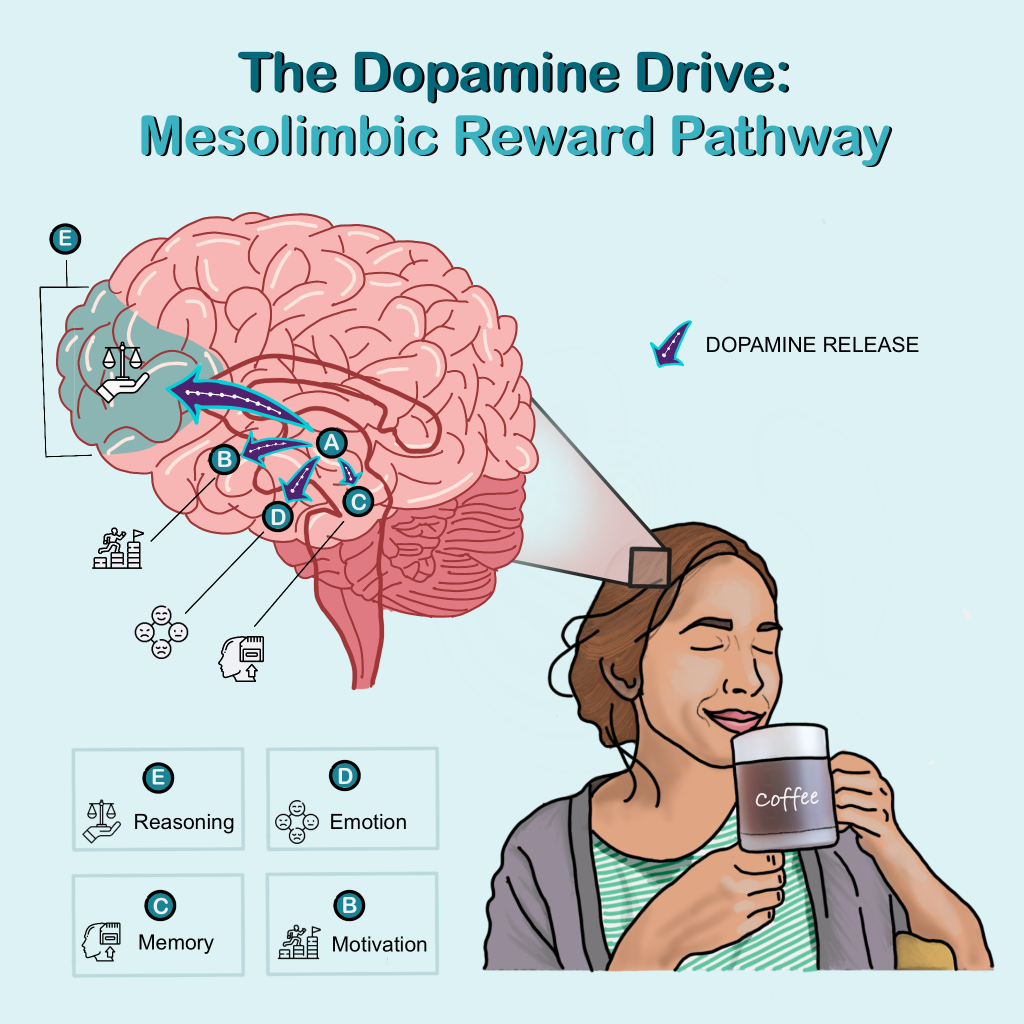
The Brain & Dopamine Reward System. Source: McMaster Brain Research Society
The Bittersweet Truth: Why Sugar is So Addictive
Sugar doesn't just taste good; it hijacks your brain's reward system. When you consume sugar, your brain releases a flood of dopamine—the same neurotransmitter associated with addictive drugs.
The Study: Research published in PLOS ONE has demonstrated that intense sweetness can be more "rewarding" than even certain illicit substances. This creates a "survival loop" where your mind associates sugar with safety and reward. Source: Intense Sweetness Surpasses Cocaine Reward, PLOS ONE
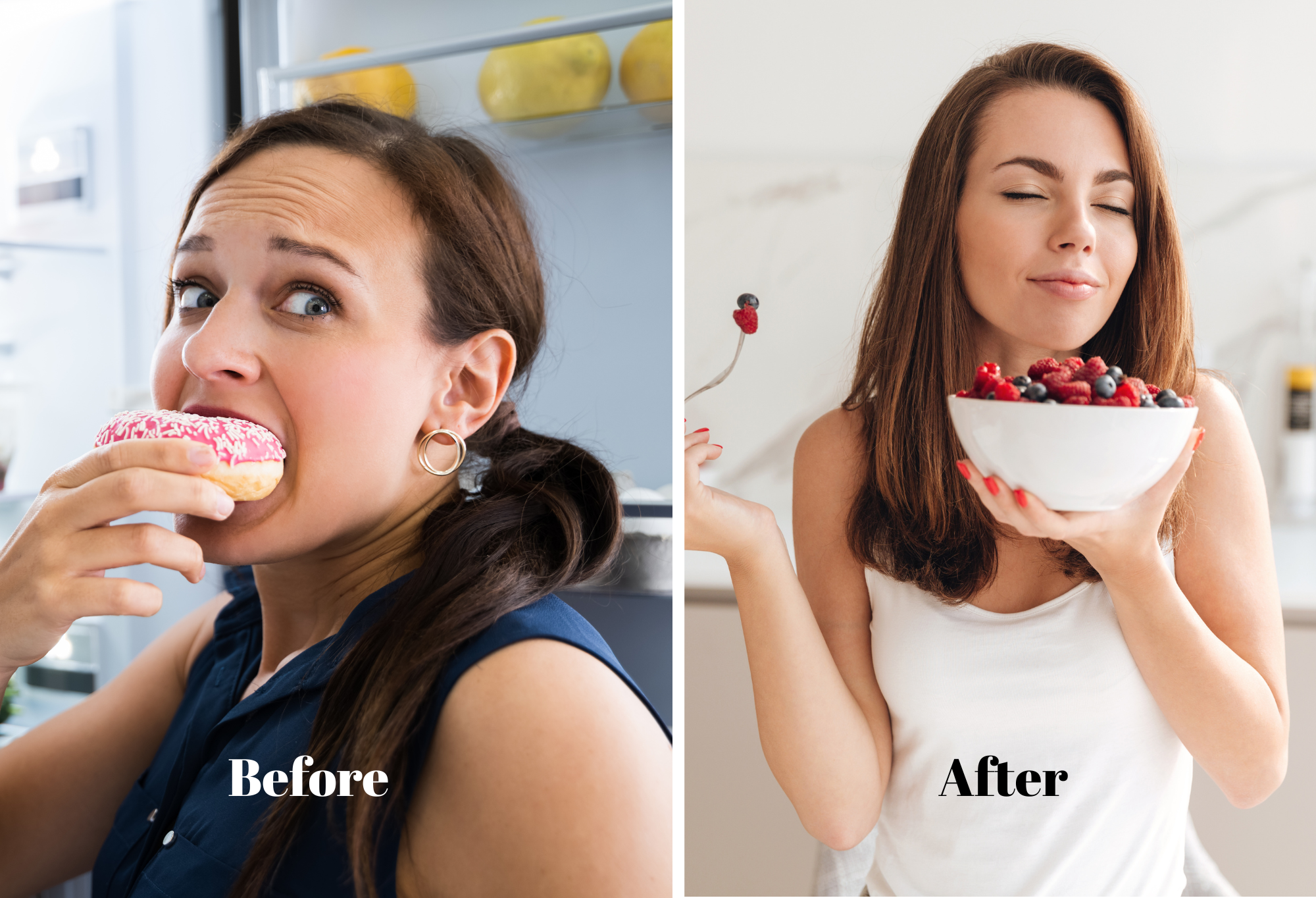
At Pao Hypnosis we use NLP and RTT techniques to move from sugar addiction to healthy food clarity.
How Hypnotherapy Deletes the "Ancient Code"
Traditional diets fail because they only address the conscious mind (the 5% of your brain). Hypnotherapy works on the subconscious (the other 95%), where your habits and survival instincts live.
1. Re-labeling the "Reward"
In RTT, we use a technique called "The Power of Words." We stop calling sugar a "treat" or a "reward" and start labeling it for what it is: a chemical disruptor. By changing the label, we change the physical reaction.
2. Eliminating the Scarcity Mindset
Many sugar addicts suffer from a "famine" program. Their subconscious thinks, "Eat this now, or it might be gone." Hypnotherapy installs a sense of "Food Security," allowing you to feel indifferent to sweets because you know you are already whole and nourished.
3. Addressing the Emotional Root
We don’t crave sugar because we are hungry; we crave it because we are seeking a feeling—comfort, love, or a "break" from stress. Hypnotherapy finds the first time you made that connection and simply... snips the wire.
What the Science Says
Clinical studies have consistently shown that hypnotherapy is a powerful adjunct to weight loss and habit change:
Significant Weight Loss: A study published in the Journal of Consulting and Clinical Psychology showed that participants using hypnosis lost significantly more weight than those who did not, and kept it off over a two-year follow-up period. Source: Hypnosis as an Adjunct to Cognitive-Behavioral Psychotherapy, APA PsycNet
Behavioral Modification: Research in The International Journal of Clinical and Experimental Hypnosis suggests that hypnosis effectively alters the "incentive salience" of food—meaning it makes junk food look less "shiny" and attractive to your brain.

Pao Hypnosis 1-on-1 consultation for breaking binge eating habits and sugar cravings via Rapid Transformational Therapy.
The Pao Hypnosis Advantage: From Struggle to Indifference
On my website, PaoHypnosis.com, I specialize in taking you from a state of "white-knuckling" willpower to a state of complete indifference. Imagine walking past a bakery and feeling the same way you feel when you look at a bowl of pebbles. No "pull." No negotiation. No "I’ll start again Monday."
Ready to Upgrade Your Mind?
If you are tired of the sugar rollercoaster and ready to reclaim your energy, focus, and health, let’s talk.
Frequently Asked Questions
1. How long does it take to see results with hypnotherapy for sugar?
Because Rapid Transformational Therapy (RTT) is designed for speed, many clients at Pao Hypnosis report a shift in their desire for sugar after just one session. By accessing the subconscious mind directly, we can achieve in hours what traditional talk therapy can take months to address.
2. Will I still be able to enjoy treats occasionally?
Absolutely. The goal isn't "deprivation," it’s indifference. Instead of a "treat" feeling like a powerful pull you can't resist, you regain the power to choose. You’ll find you can have a bite and feel totally satisfied, or simply walk away because your "emotional hunger" is already healed.
3. What is the difference between RTT and traditional hypnosis?
Traditional hypnosis often uses positive suggestions, but RTT goes deeper. At Pao Hypnosis, we use Regression to find the root cause of why you started using sugar as a coping mechanism. Once we find the root, we can "pull it out" so the habit doesn't grow back.
4. Is sugar addiction a "real" thing that hypnotherapy can fix?
Yes. Clinical studies show that sugar activates the same neural pathways as addictive substances. Hypnotherapy works by deconditioning that response, essentially "unplugging" the reward loop so your brain no longer sees sugar as a survival necessity.
5. Can I do these sessions online, or do I need to be there in person?
RTT is incredibly effective via video consultation. In fact, many clients find it easier to enter a deep state of relaxation in the comfort and privacy of their own homes. This allows the new, healthy "coding" to be installed in the very environment where you live and eat.
Ready to delete the 'Sugar Code' and reclaim your vitality? Don't spend another day fighting your own biology. Click here to book your 1:1 consultation with Pao and let’s start your transformation.